Wednesday, November 6, 2013

Production Basics Creates New How-To Video Series

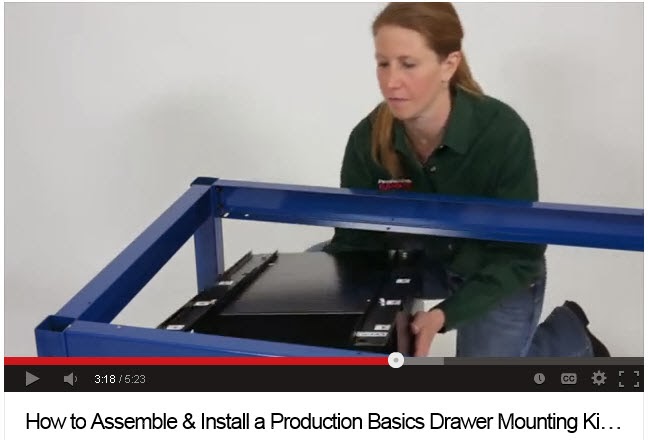
No one likes a good how-to video more than us, and that’s why we were so excited to hear about Production Basics’ new series of instructional videos. These new videos focus on how-to assemble a variety of their products.

The ten videos (counting two factory tours that look at manufacturing processes) range in length from 1:56 to 6:42. Available either on the Production Basics site or on their YouTube Channel, the videos include the following titles:
  • How to Assemble a C-Leg Station – Learn how to assemble a Stand-Alone C-Leg Workstation
  • How to Assemble an RTW Table - Watch how to put together an RTW Table
  • How to Assemble & Install a Drawer Mounting Kit (for RTW, Easy-Lift 4-Post) - A demonstration of the correct way to align and attach Drawer Mounting Kits on your workbench
  • How to Attach a Basic Nut & Bolt – See how quick and easy it is to attach basic nuts & bolts
  • How to Assemble & Install a Riser Shelf – Learn a few useful tips for assembling a Riser Shelf
  • How to Assemble & Install a Power Rail – An excellent demo showing how to install the Power Rail’s surface mount and upright mounting brackets
  • How to Install Uprights (for RTW, PedSys and Easy Lift 4-post) – Find out how to use uprights to install accessories above the worksurface
  • How to Reposition a Drawer Slide – Watch this video to see how easy it is to position drawer slides to allow for different sizes of drawers or drawer order
  • Tour our Factory- Worksurface Manufacturing – An interesting tour of Production Basics Worksurface Processing Department at their Billerica, MA facility
  • Tour our Factory - Welding Work Bench Frames – Another excellent tour of the Billerica, MA facility with a focus on welding C-Leg Frames
These new videos are an incredibly useful resource. For more information about Production Basics products please visit QSource.com. To place an order for any Production Basics products, including the RTW Series and C-Leg Series, please visit our site or contact us via phone (800-966-6020) or email.


For additional Q Source product information, reviews, how-to articles, and special offers please subscribe to our email newsletter.

Wednesday, October 16, 2013

Seven Psychological Principles of Organizational Change – Guest Blog

by Karen Wilhelm of the Lean Reflections blog

Implementing new workplace programs (such as lean manufacturing, quality control, or safety procedures) can be challenging when met with the resistance of an established mindset. Our guest blogger examines the principles that champions of change need to consider before they act.

When change fails, it's often blamed on a culture of resistance, one where people won't accept new ideas. An effort to introduce a new safety system, apply lean manufacturing concepts to an old process, automate a line, or add new quality inspection methods can run aground. In a series on my Lean Reflections blog, "What is culture and why is it so hard to change?", I have been looking at some anthropological perspectives on culture and the change process.

Decades ago, experts from the United Nations struggled to introduce beneficial new technologies like mechanized agriculture or better public health practices to traditional cultural groups. In 1953, an elite team of social anthropologists led by Margaret Mead was asked to use their thousands of hours of first-hand observations and analysis of similar circumstances to shed some light on why cultures reject change for the better.

This team of social scientists reminded us that, for a group of people to accept a change, each individual makes a decision based on both emotional and rational reasons. They identified seven psychological principles that change agents should understand. Briefly, let's take a look at them.

  1. The psychology of the experts themselves affects the process. Change champions don't always see that their beliefs and attitudes are not universal or always right. When they encounter embedded—and learned—cultural traditions that seem to be irrational obstacles to improvement, they may expect that all they need to do is give a logical explanation of a better way. They can think that, once enlightened, the group will be enthusiastic about the new methods. They can forget that their own learned attitudes about their brand of improvement took some time to take hold in their minds. They can forget that the group they are attempting to change will need time too.

  2. A person's usual daily behavior and ways of relating to others are directed by beliefs and attitudes that serve some psychological function or provide some benefit. That purpose does not have to be practical or rational. A belief that maintains a comfort zone, predictability, and emotional safety is not going to be abandoned easily. Such a belief may be psychologically necessary to a person, rather than evidence of stubbornness, unwillingness to cooperate, or inability to learn.

  3. The expert must see change from the point of view of the individuals exposed to it. A job is part of a person's self-image. People take pride in their work. The expert's "better way" may result in a loss of face or damage to some aspect of a familiar culture. If people feel undermined or embarrassed, they will resist. If members of a traditional manufacturing culture, especially managers, perceive that new ideas mean they have been wrong throughout their careers, their belief in their own expertise is threatened. It can amount to a psychological attack. And because a culture is a system, changing any part of it can have unintended consequences. Pulling one thread may cause more unraveling than expected. To see the culture as a system and from the point of view of its members takes time for observation.

  4. Experts should think twice before trying to introduce a large-scale blueprint for widespread change. But why not, if all aspects of a system are interrelated? For one thing, when people have been through plenty of other failed far-reaching plans that produced painful consequences, their work culture can become immune to another pitch. A big, detailed plan sets the stage for failure because few things will turn out exactly as predicted. People will then feel disappointed or betrayed, or even secretly happy that the initiative is in trouble. A vision or goal is important, but proposing the path to the goal begins with the small steps. Employees have a lot of small, everyday struggles that make it hard to do their jobs. Helping them solve one problem can speak louder than a hundred promises. A small-scale pilot project is a foot in the door. When the change leader says, "Let's try this, and if it doesn't work, we can try something else or go back to the old way," it will lower the anxiety level considerably.

  5. A significant change in someone's life introduces some instability or disharmony, which produces emotional tension. Old behaviors are part of the person's sense of self. New situations require new behaviors. If people feel they don't have the right skills, for example, it threatens self-esteem and may cause worry about keeping their jobs. Even changing shifts or working in a reconfigured workcell will have a psychological effect that the change champion must be aware of.

  6. Frustration accompanies tension when old beliefs and concepts of personal worth are incompatible with new practices. Even minor frustrations can add up to more serious problems. If people start believing that they can't accomplish what is expected of them, change efforts can be derailed. While some tension can help people learn and grow, they need resources and support to become more at ease with the new.

  7. When frustration is persistent or intense, the physical and psychological health of some individuals may be impaired. The signs that someone may be struggling may take the form of anger, withdrawal, illness, or even sabotage. Distress affects a person's ability to learn, and can make it appear that he or she is simply unable or unwilling to learn new methods and concepts. These potential consequences, at greater or lesser degrees, make it important to identify and resolve frustrating conditions, behave with respect, recognize individual differences, and provide encouragement and support.

When change champions take time to understand the workplace culture and the people who will experience the change before introducing disruption, they can adapt their message for that specific group of people. More importantly, they can adapt themselves. Mutual understanding leads to trust.

Karen Wilhelm, has more than 25 years of experience in manufacturing. In addition to her blog, Lean Reflections, Karen is a contributor to the Gray blog and other online manufacturing publications. She can be reached at Karen.m.wilhelm@gmail.com.


For additional Q Source product information, reviews, how-to articles, and special offers please subscribe to our email newsletter.


Friday, August 23, 2013

The Best of Q Source's "On the Bench" How-to Videos

Q Source's YouTube Channel debuted our "On the Bench" video series back in April of 2011. On the Bench was created to be a series of product previews, demos, workflow solutions, and how-to's to provide our customers with the information needed to make better buying decisions. Our how-to and workflow solutions videos aim to help viewers get their jobs done easier.

We wanted to take a quick look at a few of our best how-to videos so far. From stereo microscopes to wire shelving units, we've offered some handy how-to’s and teachable tips.

How to Properly Focus a Stereo Microscope

In "How to Properly Focus a Stereo Microscope with the Unitron Z10 Series," Peter Indrigo of Unitron provided us with a great how-to on how to properly set up and focus a stereo microscope. Using Unitron's Z10 Zoom Stereo Microscope, Peter shows how easy it is to attain proper focus and avoid eyestrain.


Setting Up a 3M Model 724 Constant ESD Workstation Monitor

Our "3M Model 724 Constant ESD Workstation Monitor" video presents 3M rep David Leventhal demonstrating how to use and set up the Model 724 ESD Workstation Monitor. David explains how this unit continuously monitors the resistance of the operator and work surface ground connections.


Assembling a Metro Super Adjustable 2™ Super Erecta® Mobile Wire Shelving Unit

Two of our Q Source staff got together to help us with a "Metro Super Adjustable 2™ Super Erecta® Mobile Wire Shelving Unit Assembly." This step-by-step video shows just how easy it is to build your own Metro Mobile Shelving Cart.


Barcode Printing

Brady's BMP71 Portable Label Printer is a versatile printer. In our "Printing Barcodes with the Brady BMP71" video, we show you how to easily create and print a variety of barcodes.


Dimension 4 Assembly

Ever wonder how to build an IAC Dimension 4 Workbench? One of our Territory Account Specialists shows how easy it is in this "IAC Dimension 4 Workbench Assembly" On the Bench video.


Using Akro-Mils Bins for 5S/Lean

Akro-Mils offers many products for 5S and Lean. This "Akro-Mils Indicator™ Bins for 5S Process & Lean Manufacturing" video demonstrates how these two-toned BinTelligence Series bins help you "Stock, Pick, Flip, and Replenish."


For more information on any of these products, or to place an order, please visit QSource.com. You can also give us a call at 800-966-6020 or contact us via email. And make sure you check back at Q Source’s YouTube Channel for new videos coming soon.

If there's a product or topic you'd like to see The Q Source Resource write about please let us know. We'd also appreciate if you share this blog post with your friends and colleagues via the social media links below. If you have questions or comments about any of the products in this blog post, or related topics, please leave us a message in the comments section.

For additional Q Source product information, reviews, how-to articles, and special offers please subscribe to our email newsletter.

Thursday, August 8, 2013

AIM-ing to Learn More About Solder: AIM Solder’s Tim O'Neill Trains Q Source Staff

AIM Solder's Tim O'Neill
Tim O'Neill, Regional Sales Manager for AIM Solder, stopped by Q Source yesterday to help us continue our regular product training regimen. Tim spoke to us about AIM Solder products and solder in general.

Beginning his session by stating, "It's in everything you have that has an on-off switch," Tim took us through the history of AIM and of solder (did you know that King Tut's sarcophagus was soldered). He went on to speak about surface mount soldering, wave soldering, hand soldering, flux, and which AIM Solder product worked best with each application.

To further help us to be able to help you choose the correct solder, Tim provided us with a list of questions that aim (pun intended) to narrow your choice down to the correct product solution. For instance, here are some questions regarding solder paste that your answers to will help us suggest the perfect selection for your process:
  1. Is it a tin-lead or lead-free application?
  2. Do you need no-clean or water soluble?
  3. Is it for a dispensing application?
  4. Is it for printing or rework applications?
  5. Are you using solder paste or gel flux?
  6. Are you using SAC305, Sn/Bi & Sn/Bi/Ag, or SN100C?
  7. Are you using SN100C & low-AG alloys or SAC305?
We want to thank Tim for his time and for sharing his extensive knowledge of AIM Solder products and the soldering process. The information provided to us will most definitely be a valuable tool in better serving our valued customers.


For additional Q Source product information, reviews, how-to articles, and special offers please subscribe to our email newsletter.

Thursday, August 1, 2013

Q Source Staff Member Delivers Keynote Speech at Young Autism Program Charitable Event

Dan Olawski delivers keynote address at
Young Autism Program Charitable Foundation
Annual Dinner/Dance
At Q Source we take great pride in the quality of our employees. Everyone at Q is committed to providing the best customer service experience possible, but there are some who go much further than that. Many of the folks at Q Source offer their own time, talent, and expertise to contribute in very meaningful ways in their communities or to raise awareness on important social issues. Dan Olawski, resident blogger and social media guru, is one of those people.

More used to writing blogs than giving speeches, Dan recently delivered the keynote address at the Young Autism Program Charitable Foundation (YAPCF) of DDI's Annual Dinner/Dance here on Long Island. Reflecting on his experiences as an autism parent and the need for autism education and awareness, Dan spoke to an audience of about 400 parents, teachers, and administrators gathered for the fundraising event.

"I'd never spoken in front of that many people before and was extremely nervous. But I relaxed after I realized how important the topic was to me…and getting my first laugh at one of my jokes didn't hurt either," he said.

Dan has worked at Q Source since 2010. In addition to his blogging and social media work for The Q Source Resource Blog and QSource.com, his spare time is spent contributing to the Autism Society's blog and his own personal blog where he talks about his experiences and offers his insights on being an autism parent. Dan has had a passion for autism awareness and advocacy ever since his young son with autism was a student in the YAP program.

Autism is a multifaceted developmental disorder that includes impairments in social interaction and developmental language, communication skills, and rigid, repetitive behaviors. Autism includes a wide spectrum of symptoms and levels of impairment. There is currently no cure for autism.

The Young Autism Program (YAP) was created in 1995 as an experimental program with the goal of returning autistic children to regular kindergarten by age six. It is one of the most intensive programs of its kind in the U.S. The YAP Charitable Foundation was formed by YAP parents in 1999 to privately raise funds to supplement the unique educational needs of children enrolled in the Young Autism Program. The Annual Dinner/Dance is their largest fundraising event of the year. Previous Dinner/Dance guest speakers have included state and local representatives, researchers, and other autism parents.

"Being asked to speak at the YAP Dinner/Dance was an incredible honor," Dan said. "Many parents of autistic children go through similar experiences as I have and to see the audience's reactions to my speech was very touching and one of the most incredible and inspirational feelings I've ever had."

Everyone at Q Source would like to congratulate Dan for being asked to deliver the keynote at this important event. We're all very proud of your hard work and devotion to this very important subject. Keep up the inspiring work!